
A Father’s Unseen Influence
The Bell JarThis flow traces the ways Esther’s father remains present through childhood memory, lost instruction, and a grief that finally breaks through.
increasing Bearing strength in each event
 decreasing
Bearing strength in each eventdecreasingA Childhood Before Loss

The Last Pure Happiness
Early closeness
Esther remembers running on the beach with her father and later identifies childhood as the last time she was purely happy. The memory is bright but bounded by his early death.
An origin point
The recollection gives her happiness a lost location in time. It does not explain everything that follows, but establishes bereavement as one of the deep facts of her life.
Knowledge Not Passed On

Imagined Lessons
A missing teacher
Esther imagines that her father would have taught her about insects and languages. His expertise becomes a picture of education she might have received within the family.
Regret and possibility
The imagined lessons suggest not only affection but the life that was cut short. Esther’s longing gives her father an active role in a future he never lived to see.
The Unvisited Cemetery
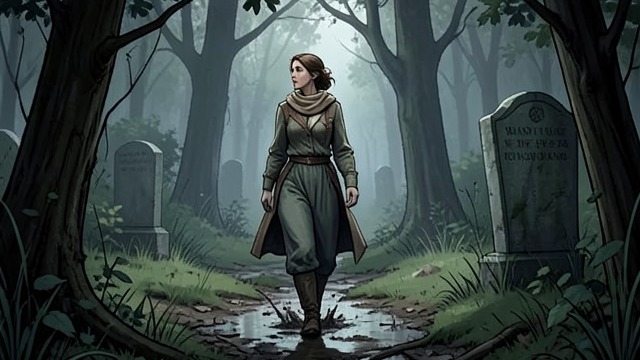
A Journey Toward the Grave
A renewed impulse
Esther decides to visit the cemetery where her father is buried. No one in the family has made the grave a regular place of remembrance.
The past becomes physical
The search forces her to encounter the ordinary, neglected landscape of death rather than an abstract memory. She is not prepared for the grief that the visit will release.
Tears in the Rain
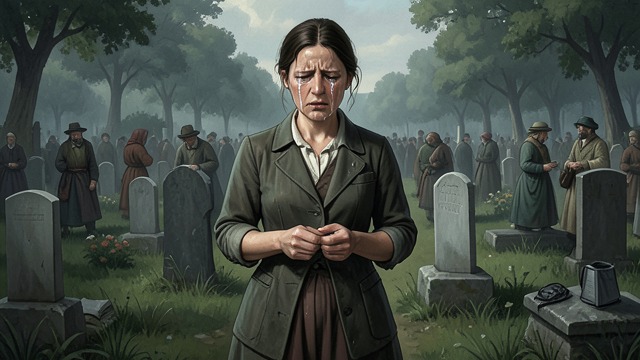
Mourning at Last
The grave found
Esther discovers her father’s gravestone in the newer section of the cemetery, crowded against another marker. The modest stone makes his absence feel plain and permanent.
A delayed lament
She cries hard and remembers that neither she nor her mother cried when he died. Her grief becomes an event in the present rather than a fact safely held at a distance.
Part of the Landscape

Memory Integrated
A catalogue of experience
Esther remembers her father among the people and events that marked her breakdown. The memory belongs to the same inner landscape as New York and the hospital.
No simple cure
The past is neither erased nor resolved into a lesson. Esther’s ability to recognize it as part of herself signals a changed relation to memory, not an escape from pain.
before Esther turns nine
during Esther’s summer at home
late summer, after Esther abandons the volunteer job
during Esther’s cemetery visit
near the ending, as Esther remembers her crisis
